My Homelab Journey: Why I Started Self-Hosting at Home
March 16, 2026
·4 min read
xs
What is a homelab?
A homelab is a small personal IT environment that you build and run at home. It can be as simple as an old laptop or as advanced as a rack full of servers, networking gear, and storage devices.
Why I want to build one?
For me, a homelab is the perfect environment to learn, test, and experiment with tech in a convenient and practical way. Reading documentation is useful, but actually running services yourself teaches a very different kind of lesson. You start to understand how systems behave, how things fail, and how different tools fit together.
What makes a homelab especially attractive is the level of control it gives you. Instead of relying entirely on third-party platforms, you get your own piece of hardware to configure the way you want. You decide what runs on it, how services are exposed, and how your data is managed.

The biggest turning point for me was discovering Docker. The idea of spinning up services quickly and cleanly felt almost magical. Once I realized how easy it was to deploy applications, I became obsessed with the idea of hosting my own stuff. I wanted to try everything.
That excitement, however, came with a problem: my laptop was not built for that kind of workload. What started as fun experimentation quickly turned into resource stress, heat, and the constant feeling that I was pushing the machine too far. That was the moment I realized I did not just want a place to experiment — I needed a dedicated server for it.
So this homelab is not just a side project. It is the natural next step in my curiosity about self-hosting, containers, and building systems I can truly call my own.
Hardware Setup
Right now, my homelab setup is intentionally simple.
I will probably build an Intel/AMD PC and set it up as a server within a year. If that happens, I may write a follow-up post about that version too.
For now, the machine behind everything is:

- An
arm64Apple Mac mini M4 (256 GB storage / 24 GB memory)
It may not be the most traditional homelab choice, but it is compact, efficient, quiet, and powerful enough for the services I want to run at this stage. For a starting setup, those qualities matter more to me than having a huge or complicated server.
One thing I like about starting small is that it forces me to think more carefully about what I actually need. Instead of overbuilding from day one, I can focus on learning the fundamentals: deploying services, organizing containers, handling routing, and monitoring system health. Later on, if my needs grow, I can always scale the hardware with a better idea of what I actually want.
Service Stack
The most exciting part of a homelab is the service stack — the collection of tools and applications that turn a machine into something genuinely useful.
Here is what I am currently running or planning to run in my homelab setup.
Dashboard
A good dashboard makes a homelab feel alive. It gives you a single place to see what is running and quickly jump into the services you use most. Below are the dashboards I stumbled upon during my journey.
Media backup
Backing up personal media is one of the most practical reasons to self-host.

Media server
A homelab also gives me a place to centralize and manage media.
The container of this application is not fully supported on macOS. I downloaded the application for it.
Plex media server is also a popular choice. It has better UI :)
Utilities
Sometimes the most useful services are the small ones you keep coming back to.
Mines hosted on: https://tools.xsooi.com
Container management
Once multiple services are running, visibility and management become much more important.
Proxy and networking
As soon as you host multiple services, routing becomes a core part of the setup.
- Traefik — for reverse proxying and service routing
- WireGuard — for secure remote access through VPN when I'm abroad
Monitoring
A homelab becomes much easier to maintain when you can actually see what is happening.
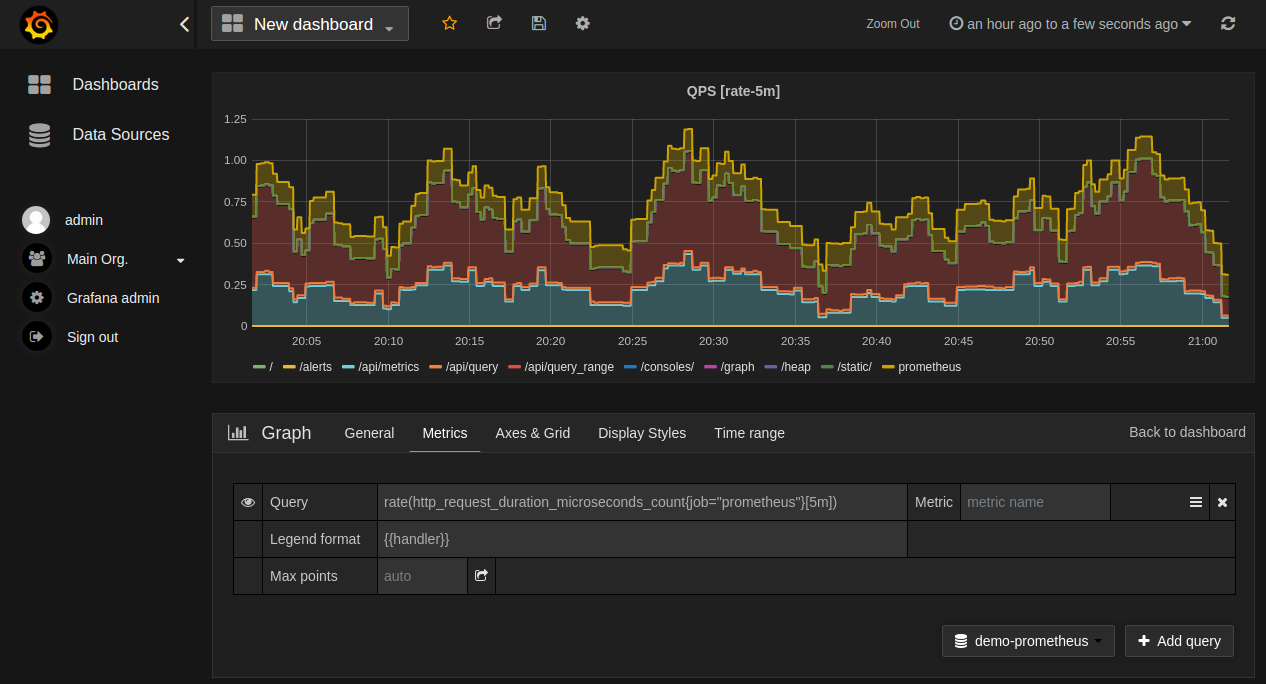
- Prometheus — for metrics collection
- Grafana — for turning those metrics into useful and beautiful dashboards
Together, these services form the foundation of a setup that is both practical and enjoyable to build. It is still evolving, but that is also part of the appeal — a homelab is never really finished.
Why this setup matters to me
What I like most about building a homelab is that it sits at the intersection of curiosity and usefulness. It is a place where I can learn new tools, break things safely, and slowly build a system that supports things I actually care about.
This setup may be small right now, but it already represents something bigger: the shift from just using technology to actually owning and shaping it.
And honestly, that is what makes self-hosting so exciting.
Closing thoughts
This is my homelab setup at the start of 2026 — a small but meaningful beginning. I expect it to change over time as I learn more, outgrow certain tools, and move toward more dedicated hardware.
For now, though, this setup is enough to let me explore, build, and enjoy the process of running my own services.
That is exactly what I wanted.
#homelab#self-hosting#docker#home server
Next in SeriesEpisode 1: Homelab Mac Mini Set Up